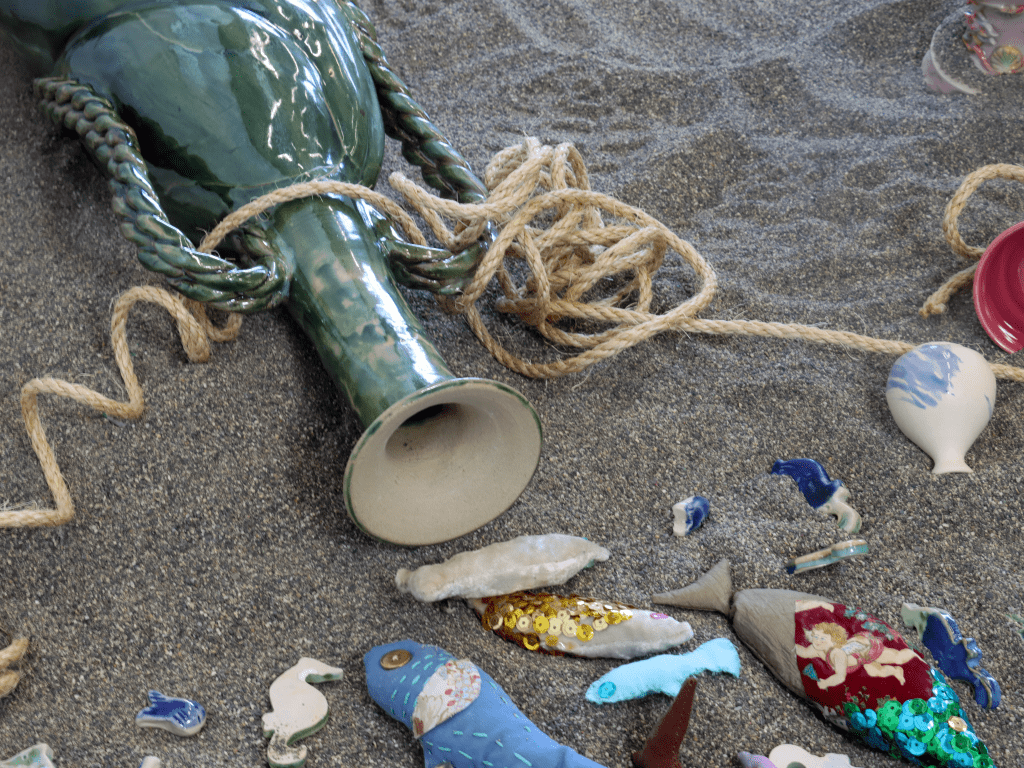
Goblina and the Magic Ribbon is the name of an ongoing series that started in Fall, 2024. The work presented here is all a part of the same series in different iterations.
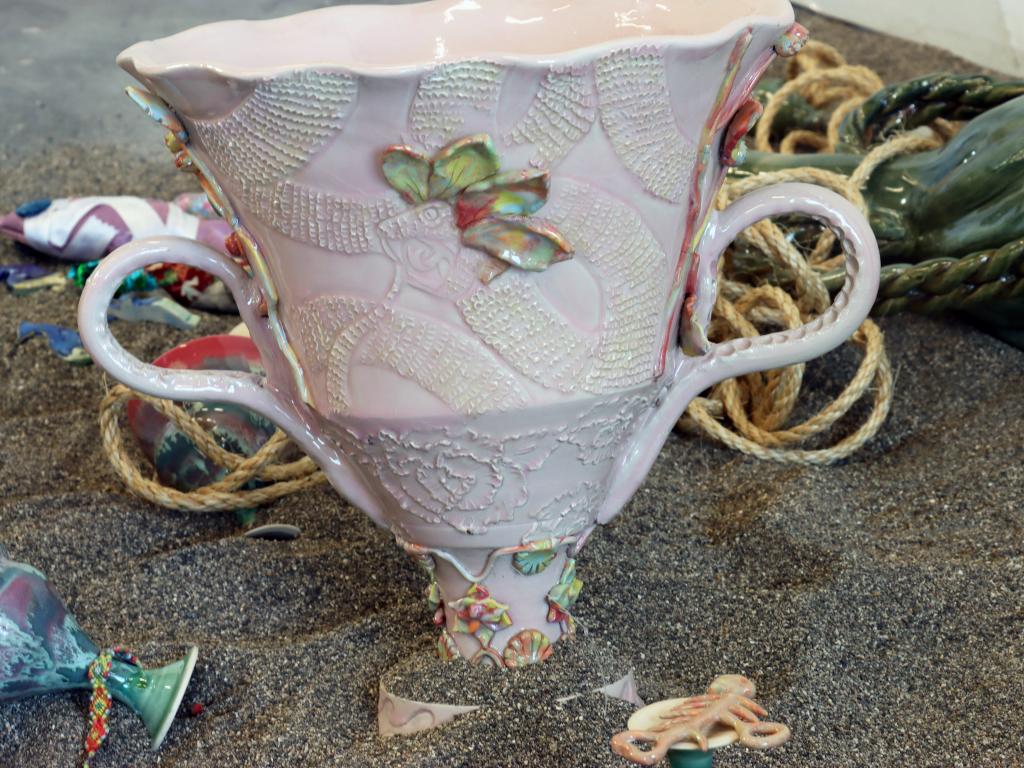
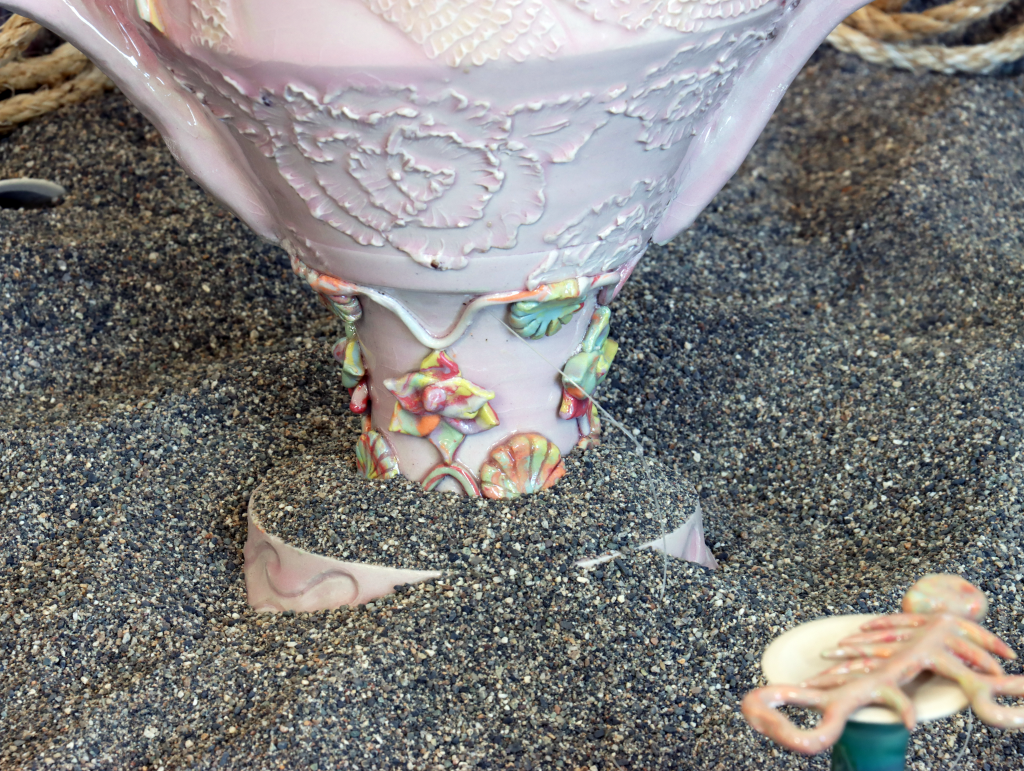
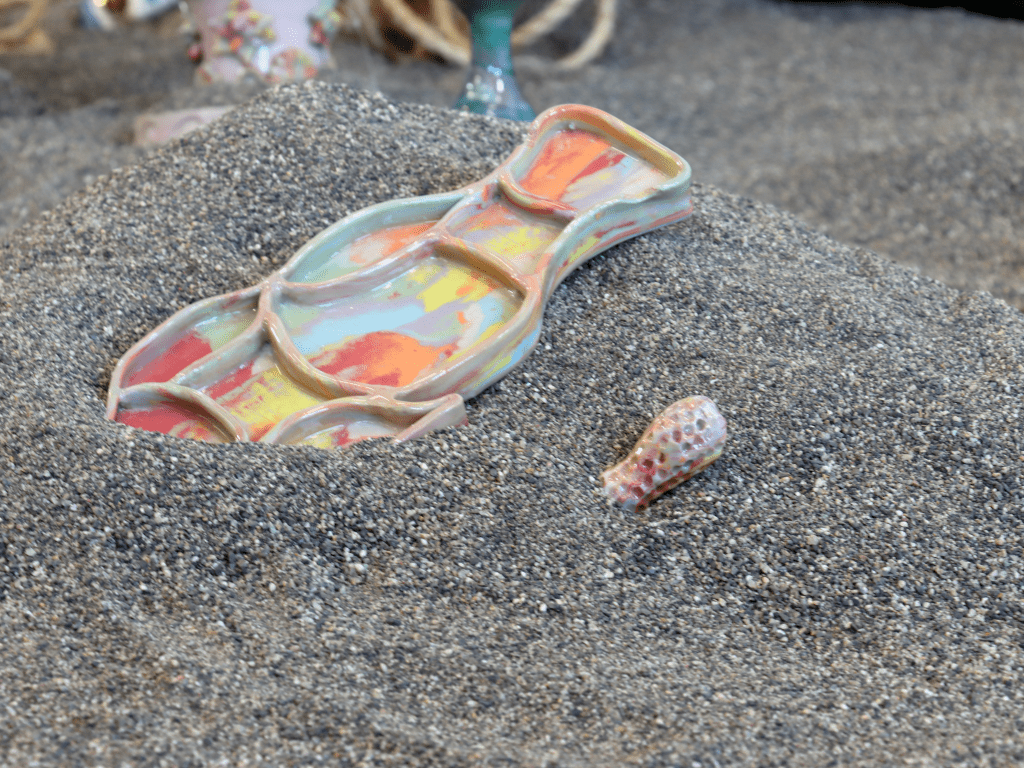
“Goblina and the Magic Ribbon: Sessions 0-4,” is the culmination of my experimentation within this series. The work is an installation made up of several ceramic vessels, chalices, mixed-media objects, and wine, all on top of a bed of sand reminiscent of a beach. Inspired by queer-theory, game design, and role-playing, the piece seeks to explore the relationship between reparative art and play, worldbuilding, and material culture. Reparative play and art ask us to reconsider our world and lives through these activities allowing us to move within these lived experiences as we imagine more hopeful futures.
Using Dungeons and Dragons 5e as source material, I’ve begun writing the campaign, “Goblina and the Magic Ribbon.” In this space, my cohorts and I explore Stamvathes, a transnormative world mainly inhabited by short, gender-queer goblins. As we move from fictional isle to fictional isle, we meet the locals of this plane and learn about what a transnormative world might value through socializing, problem-solving, adventuring, and experiencing a place where heteronormativity isn’t our reality. We then manifest these memories into the objects you see here: remnants of our currently-played sessions captured within these vessels, chalices, and mixed-media mementos.
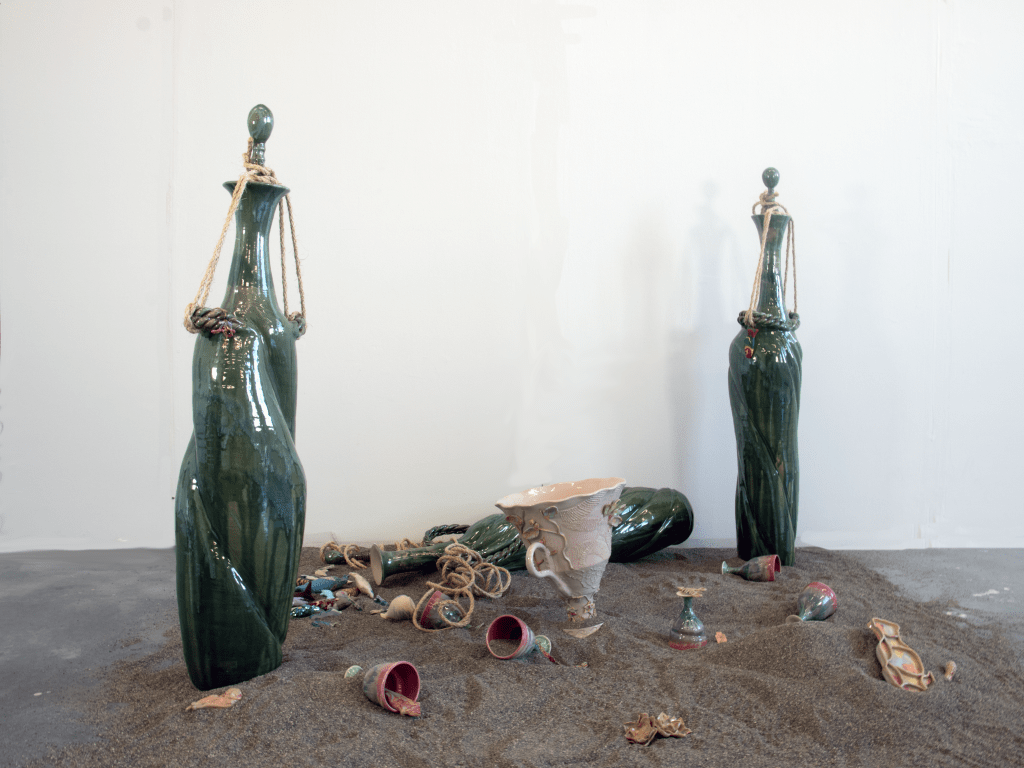
Goblina and the Magic Ribbon: Sessions 0 – 4
5 x 5 x 5′
Glazed Stoneware, Mixed media, rope, wine, sand, textile
Made in collaboration with: Pageturn Penscratch (Hayley Glossop), Fig Figgy Fish (Maya Kamachi), Róisín (Emma Bradshaw), Moolia (Jesse McIver), Brisket (Shea O’Donnell), and Nekk Featherington (Fran Cavalletti)
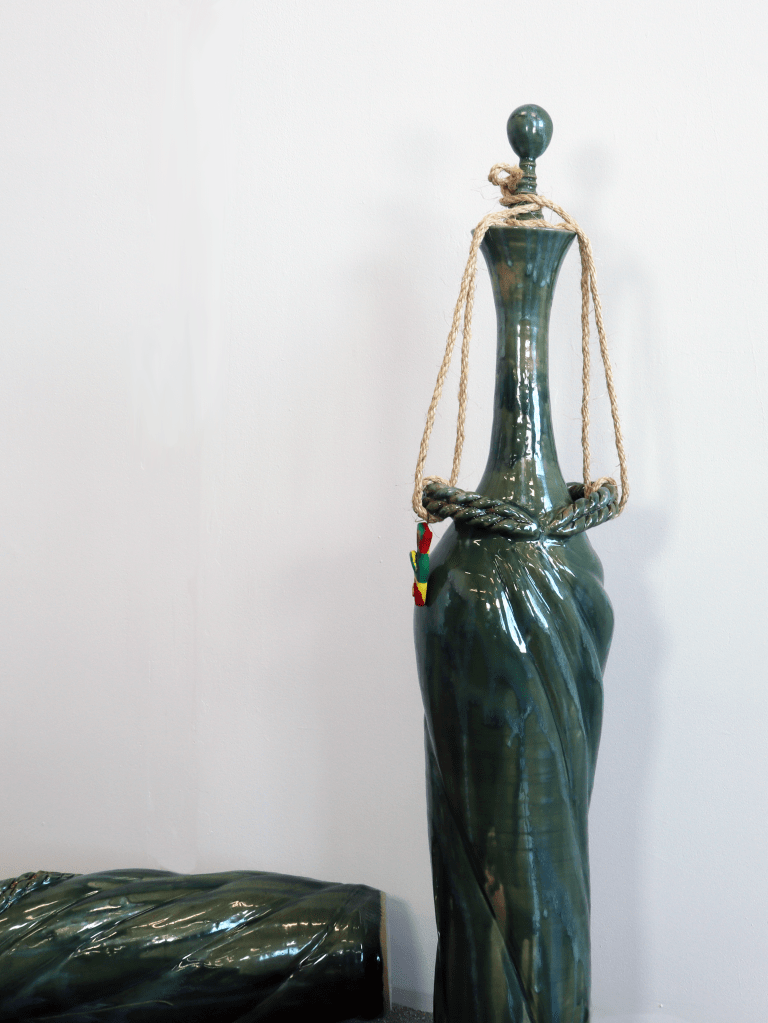
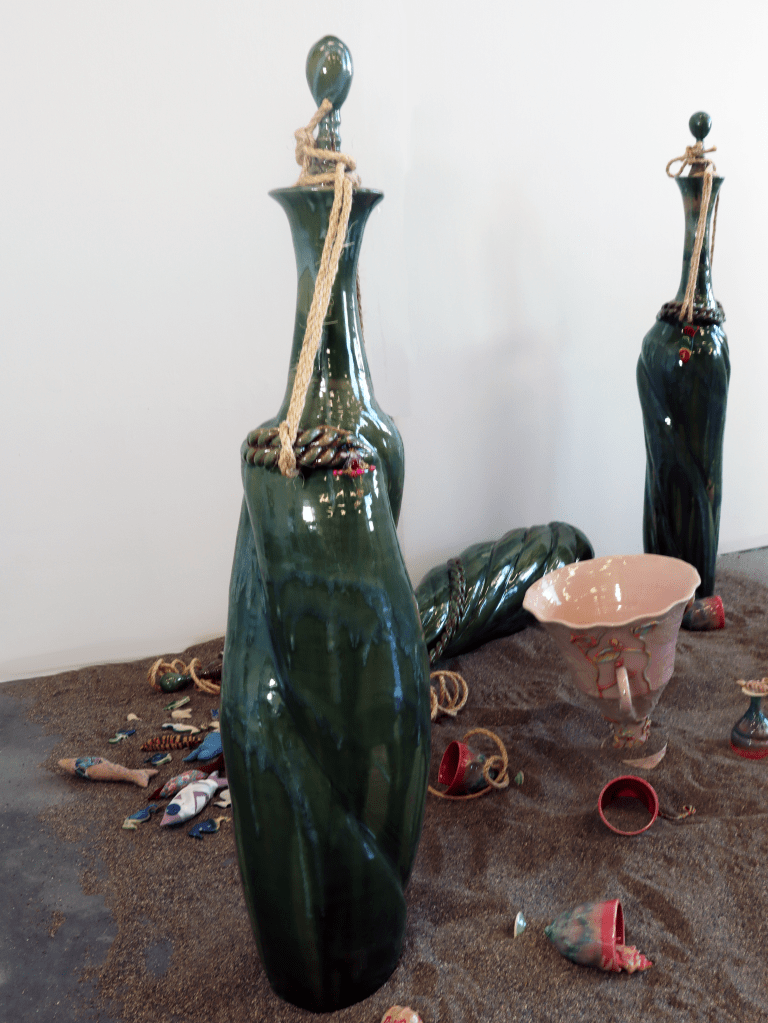
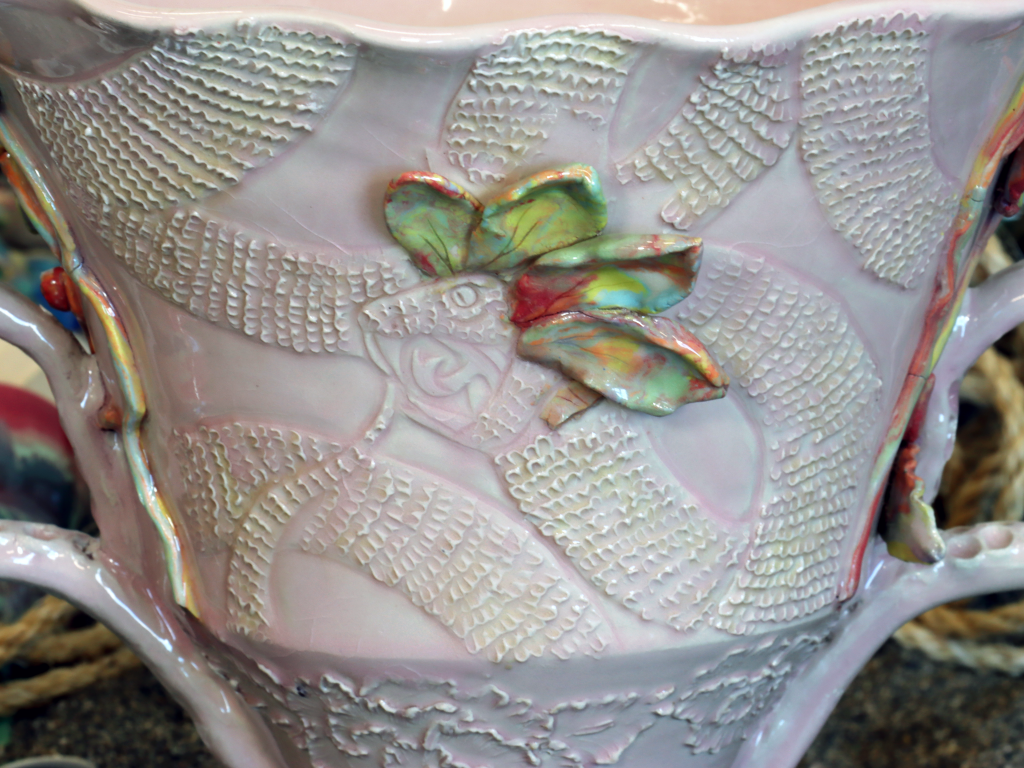
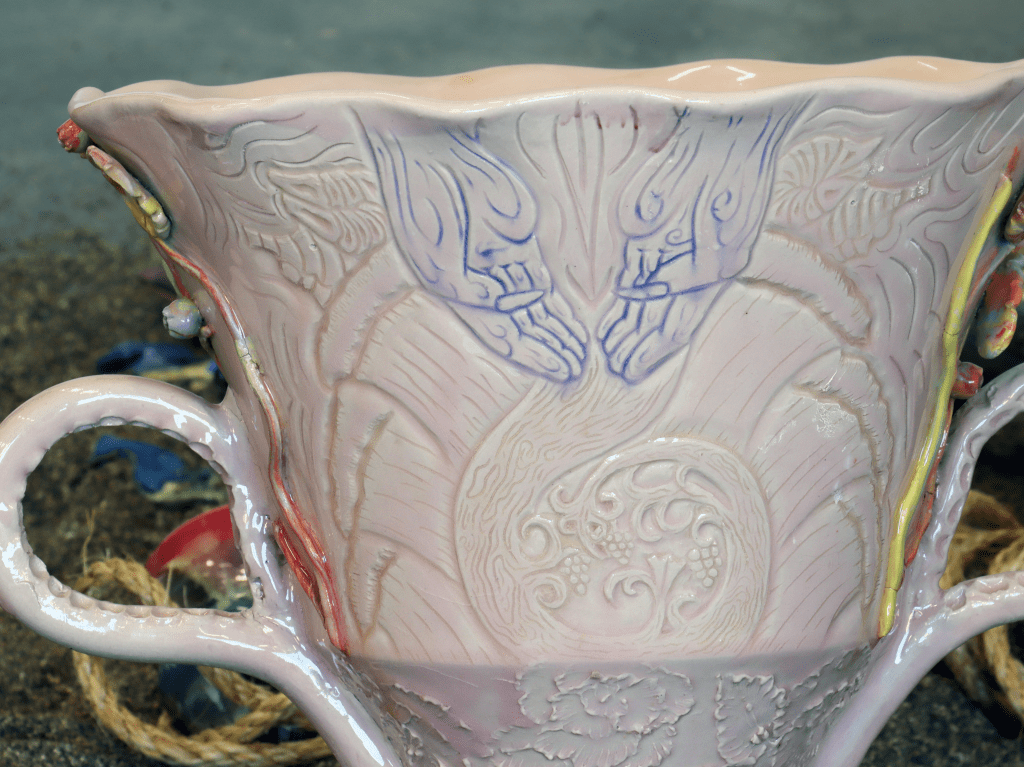
The enmeshment of reparative play, artmaking, and material culture hold a special place for me: as a Greek trans woman, I have been enamored by the past and present artifacts of my culture, but frequently see how trans people are missing from Greek history and outright excluded by current Greek Orthodoxy. Ceramic’s rich history of storytelling makes it an exemplary conduit for this mythmaking. Using these objects, I channel the material culture of ancient Greece as I alter these vessels through form and surface, leaving the viewer with the impression of the familiar subverted through new narratives and augmentations. These odd, decorative vessels simultaneously remind of us our reality while maintaining an otherworldliness: elaborately lobed amphora covered in an unfamiliar oribe sits next to traditional Greek calyx decorated with out-of-place narratives finished in a strangely pink celadon. On either side, these objects are surrounded by peculiar chalices, marbled clay curios, and toy fish, manifesting the material culture I’ve developed with my friends as we leave behind traces of our adventures in Stamvathes through playful knick-knacks and marks in the sand. The viewer is confronted by this ephemeral narrative made material as we’ve reimagined and actualized a more optimistic world through reparative play and artmaking, further blurring the line between what is privileged as real and the ostensibly fictional.


 Galateia Kefalas: Artist Portfolio